
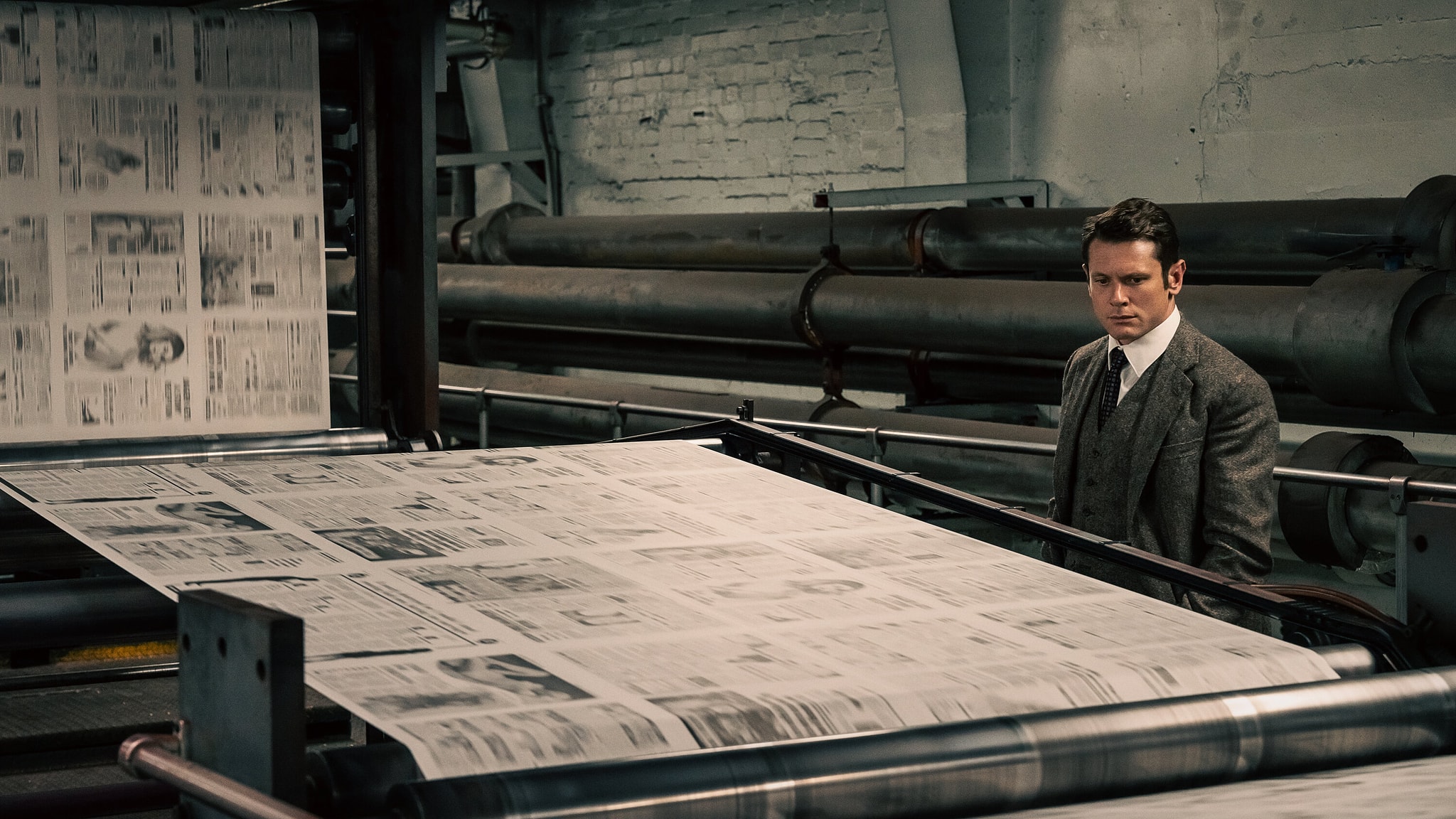
Danny Boyle’s Ink opened the Venice Film Festival on Wednesday, plunging the Lido into the noisy, commercially ruthless world of British tabloid journalism. The film traces the rise of The Sun, the paper that recast popular news as a blend of sensation, sport and scandal, and it does so in the restless register that has long marked Boyle’s work.
Where a more solemn treatment might have framed Fleet Street as a morality play, Ink treats the tabloid’s ascent as both a cultural jolt and a business lesson. The picture’s central claim is hardly subtle: scandal sells, and a large part of the public has always been willing to buy. Boyle’s camera, true to form, keeps moving, as if matching the paper’s own hunger for the next splash.
A festival opener built on tabloid heat
Choosing Ink as the festival’s opening film places a distinctly British story on an international stage. Venice often begins with prestige and restraint; Boyle offers velocity instead. The Sun’s emergence is staged as a rollicking enterprise rather than a quiet institutional history, with the newsroom presented as a machine that thrives on outrage, celebrity and the promise of tomorrow’s front page.
“Tabloid scandals sell — and the public is buying.”
— the film’s central argument
That argument is not presented as a footnote. It is the engine of the drama. Ink suggests that the tabloid did not merely invent an appetite; it recognised one that was already there and then fed it with industrial efficiency. Readers, in this telling, are not simply victims of a cynical press. They are customers, and the product is excitement dressed as news.
“Boyle stages the paper’s rise in his trademark rollicking style — restless, noisy and unapologetically populist.”
— on the film’s approach to Fleet Street
The result is less a lecture on media ethics than a portrait of momentum. Boyle has always been drawn to stories in which energy itself becomes a kind of ideology, and The Sun, as rendered here, is energy made print. Headlines arrive like punches. Circulation is treated as victory. The moral accounting, such as it is, sits inside the spectacle rather than above it.
Whether festival audiences read Ink as indictment, celebration or something uneasily in between will likely depend on how much affection they still have for the tabloid voice. What the opening night made plain is Boyle’s conviction that the story of The Sun is not a closed chapter of British life. The scandals keep coming. The public, the film insists, keeps turning the page.