

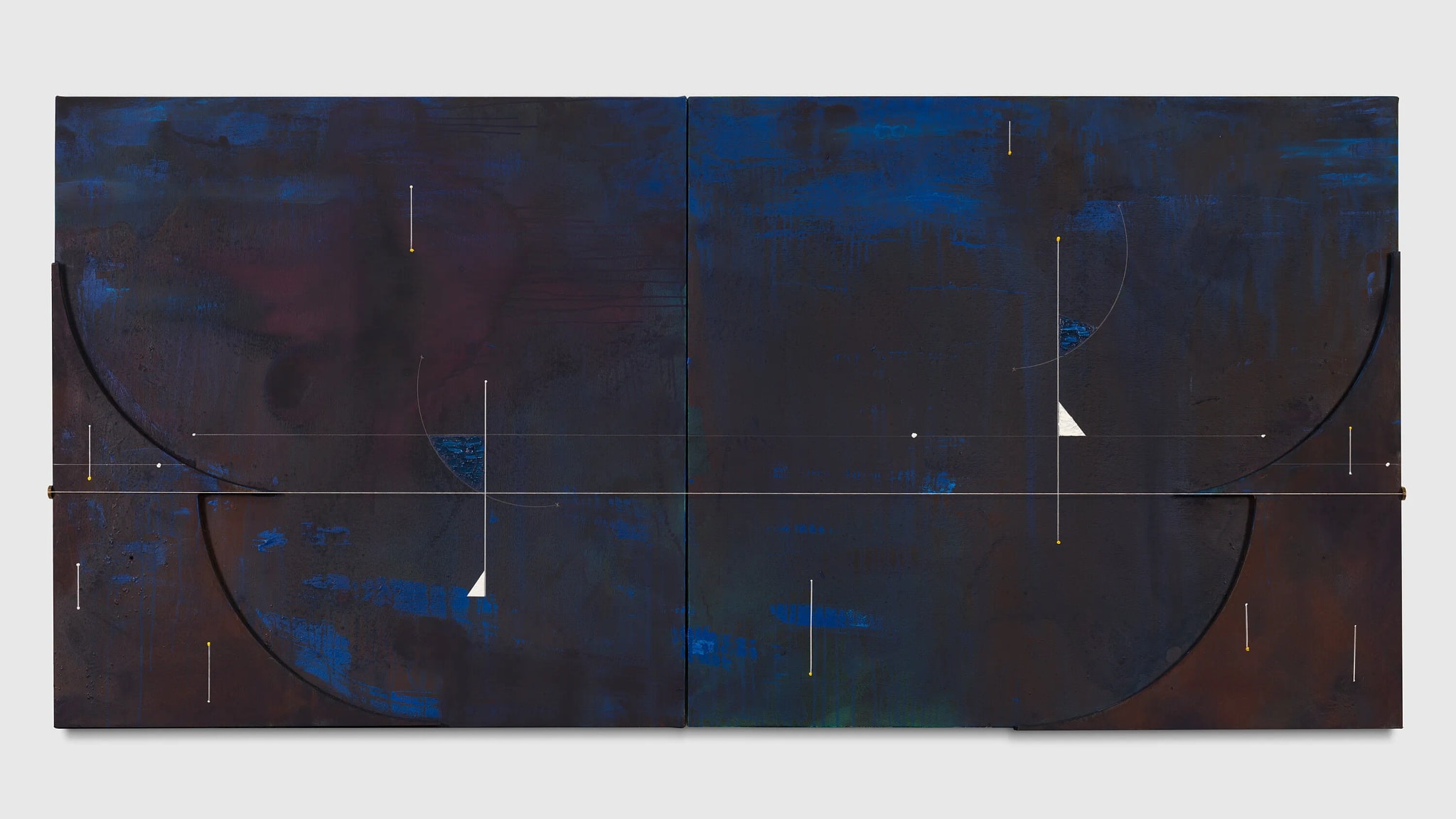
There is a kind of depth that sculpture is presumed to own. It is celestial, receding, almost gravitational. Torkwase Dyson has put that depth into paintings.
The latest works do not decorate a surface. They thicken it. What the eye meets is not a picture of space but a pressure, as if distance itself had been folded into pigment.
A third space on the wall
The usual division is blunt. Sculpture occupies the room. Painting occupies the wall. Dyson's latest paintings ignore that division without abandoning the wall at all.
“Sculpture occupies the room. Painting occupies the wall. Dyson's latest paintings ignore that division without abandoning the wall at all.”
— Kings Journal
What they offer instead is a celestial register of depth, the sort of infinite recession that bronze and stone are trusted to suggest and that pigment is not. The eye keeps travelling. The surface does not confess where it ends.
“They offer a celestial register of depth, the sort of infinite recession that bronze and stone are trusted to suggest and that pigment is not.”
— Kings Journal
The result is neither a trick of illusion nor a retreat into relief. It is painting that has learnt to think like volume. Two dimensions and three remain distinct as facts of matter. As facts of seeing, they have begun to blur.