
China’s latest humanoid robots have a talent for spectacle. They walk, dance and pose for cameras, and they have become a fixture of technology fairs and viral clips. Behind that theatre, however, a less photogenic transformation is already reshaping the country’s factories.
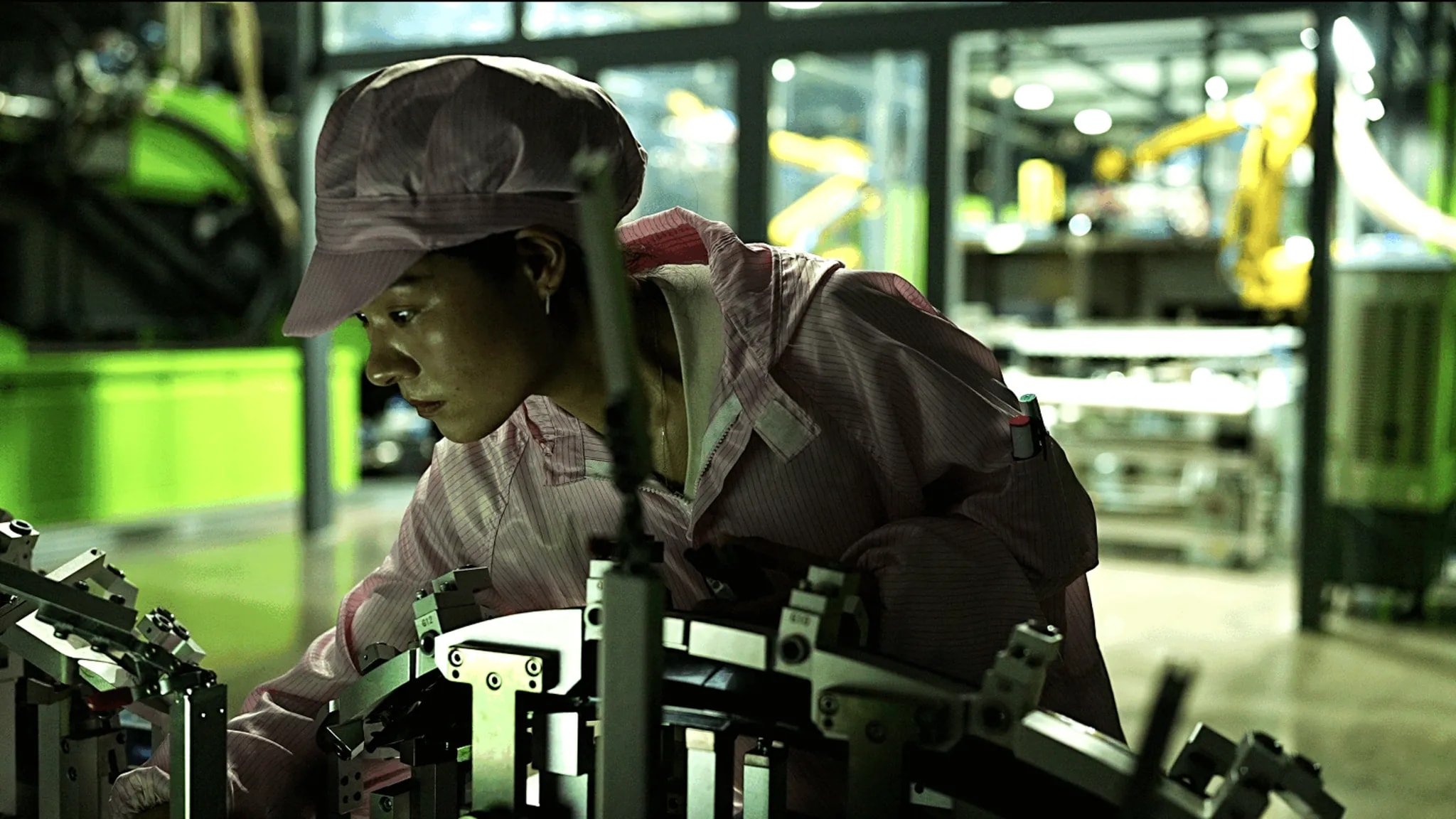
According to reporting by the BBC, more than two million robots are now at work on Chinese production lines — and that industrial army is expanding rapidly. These machines rarely make headlines. They weld, assemble, sort and inspect. Their advance is quieter than any bipedal prototype, and far more consequential for manufacturing output.
“China’s factories already run on a robotic workforce of more than two million, and that fleet is still growing at speed.”
— BBC News
The machines that do not walk
Humanoids capture attention because they resemble people. Factory robots succeed because they do not need to. Fixed arms, mobile platforms and specialised cells can be installed at scale, programmed for repetitive tasks and run around the clock. That is the quieter revolution: not a single breakthrough android, but the steady multiplication of proven industrial systems.
The contrast matters for how the world reads China’s automation story. A humanoid on a stage suggests a near future of general-purpose labour. Two million robots already on the shop floor describe a present in which large parts of manufacturing are being reorganised around machines that never leave the plant.
- Humanoid robots dominate exhibitions, demonstrations and online attention
- Industrial robots already number more than two million inside Chinese factories
- The factory fleet is scaling up quickly, with less public drama than walking machines
- The larger economic effect is likely to come from this quieter, existing deployment
Scale, not spectacle
None of this makes the humanoid push irrelevant. Research laboratories and manufacturers are clearly investing in machines that can move through human spaces. But the BBC’s account underlines a mismatch between what the public sees and what industry is installing. The show-stealers are still few. The workhorses are already counted in the millions.
“Humanoids may steal the show, yet the machine revolution that is actually unfolding is quieter, larger and already on the factory floor.”
— BBC News
For policymakers and competitors watching China, the useful measure is therefore not how lifelike the latest prototype appears, but how fast ordinary industrial robots continue to fill the country’s plants. That quieter build-out is the story already in motion — and it is the one most likely to change how goods are made.